Why food matters on a personal development retreat
On a coaching retreat, a transformation seminar, a writing week or a breathwork retreat, the real work happens in the sessions. But what happens between sessions matters too. Participants often arrive tired, straight out of a busy life, and agree to let go for a few days. If they have to wonder where to eat, who is doing the shopping or when dinner will be ready, part of their attention drifts back to logistics.
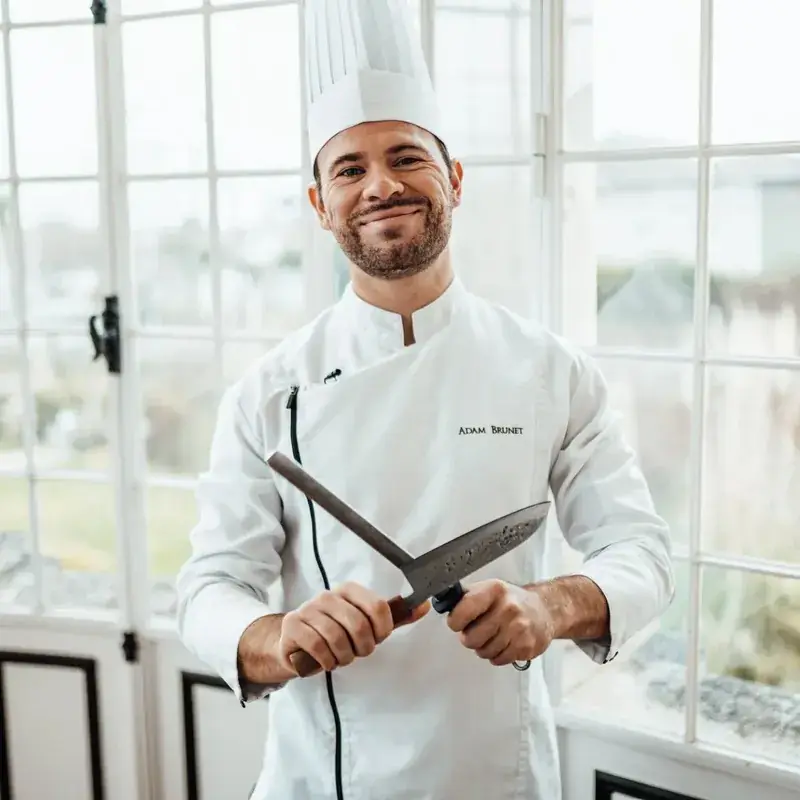
My job is simple: nobody should have to think about meals. I have been a private chef for around twenty years, and I cook seasonal French food from market produce, right in the villa or chalet where your retreat takes place. Meals are ready on time, planned around each person, and they become moments when the group comes together without effort. It is the same approach I bring to all my wellness retreats.
The table also plays a quieter role. After an intense morning, a shared lunch lets people breathe, talk about something else, or carry on a conversation. In the evening, a carefully cooked dinner closes the day. That is often when the group really bonds.
Meals built around your programme
Before I think about menus, I look at your schedule. Session times, practices on an empty stomach, periods of silence, planned outings: all of this decides what I serve and when. Here is a typical day on the Exclusive package (three meals and an afternoon snack), for a retreat that starts early:
- 7am: breathwork or meditation before breakfast. I prepare breakfast quietly.
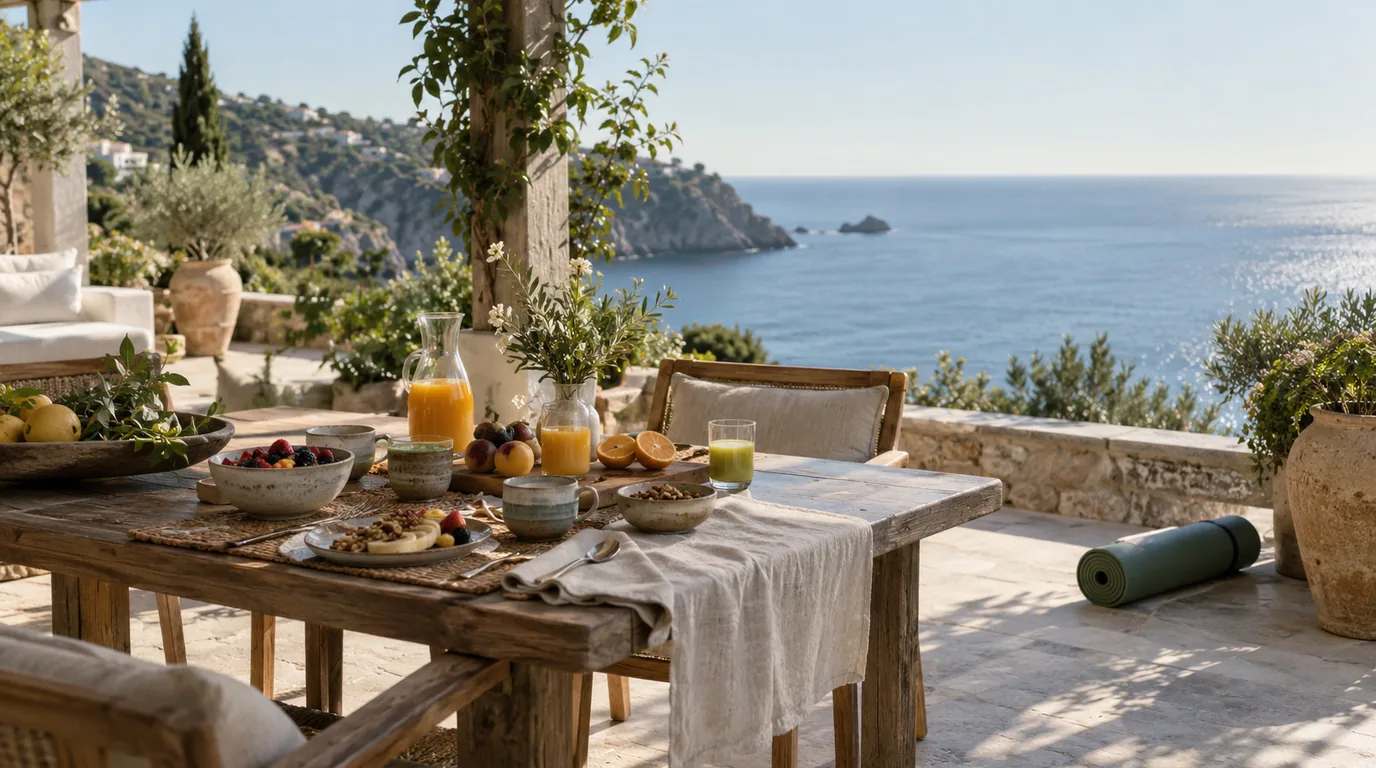
- 8.15am: breakfast. Fruit, yoghurt, eggs, good bread: enough to last the morning without feeling heavy.
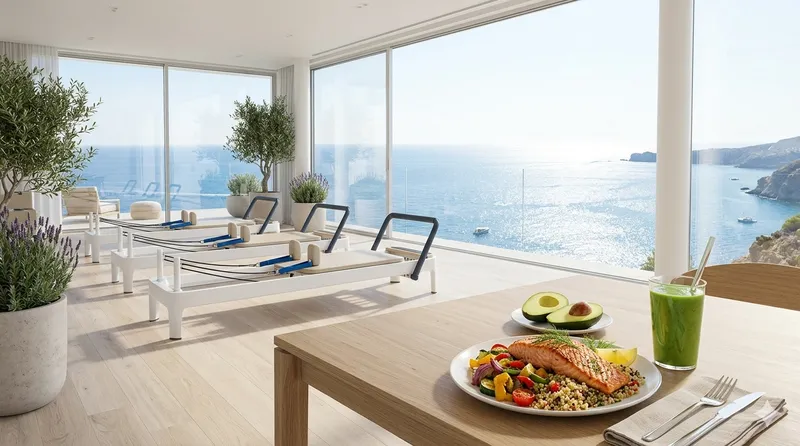
- 12.30pm: lunch. Vegetables, grains, fish or poultry. A meal that fuels people and lets them start again at 2.30pm with a clear head.
- 4.30pm: afternoon snack. A homemade cake, fruit, hot or cold drinks for the break.
- 7.30pm: dinner. The most elaborate meal of the day, served at the table once the sessions are over.
These times are only an example. If a session runs over, lunch waits. If you plan a silent meal, I serve without announcing the dishes and stay out of the way. On the Prestige package (two meals), we choose together which ones I cover, usually lunch and dinner. On the Essential package, I take care of one meal a day, lunch or dinner.
Diets, allergies and personal habits
A retreat group brings together very different people. Some are vegetarian or vegan, others avoid gluten or dairy, others have a serious allergy. Many also use the retreat to cut back on coffee, sugar or alcohol.
I ask you for this information before the stay, participant by participant. I then write menus that take these needs into account from the start, rather than serving substitute plates on the side. Whenever possible, everyone eats the same dish, adapted where needed. Allergies are handled strictly in the kitchen.
I am not a nutritionist and I do not promise miracles. I cook fresh, homemade, balanced food that leaves room for pleasure. After a day of inner work, that pleasure matters.
Produce from where you are
I work all over Europe, from the Mediterranean to the Alps. Wherever you are, I shop locally: markets, fishmongers, farmers, bakers. Cooking with local produce is also a way of grounding the group in the place it has come to.
In the Algarve, that means fish from the auction, citrus and almonds. In Mallorca or Greece, tomatoes, olive oil, herbs and island cheeses. In an Alpine chalet, mountain cheeses, root vegetables and lake fish. On the Arcachon Bay, oysters and fish from the coast. The menus follow what I find at the market, and that is what keeps them alive.
How we work together
It all starts with a message, through the contact form or on WhatsApp, followed by a call if you wish. You tell me about the venue, the dates, the number of participants, the programme and the spirit of the retreat. I then send you a proposal for how the meals will run, along with a clear quote.
During the stay, I do the shopping myself. Groceries are charged at the price paid, with receipts. I cook, I serve and I leave the kitchen clean after every meal. There is nothing for you to coordinate.
Discretion is part of the job. On this kind of retreat, participants open up and need calm. I stay out of the sessions, I respect periods of silence, and what I hear stays in the house.
For example, I cooked for a writing retreat run by Foreword Retreats, which brings American women writers to Europe. At lunchtime, I laid out the meal facing the view, then slipped away so they could get back to writing. In the evening, with my maître d'hôtel, I served a plated dinner. I tell the story of that week in an article written in French.
What it changes for you and your participants
For you as the organiser, it is one less thing to carry. No caterer to find, no deliveries to chase, no shopping between sessions. You stay fully available to your group, from the first day to the last.
For participants, it is the freedom to give themselves completely to what they came for. They know the meal will be ready, that it will take their needs into account and that it will be good. These are simple things, but they weigh in how people remember a retreat.
I work on stays of four days minimum. If you are planning a retreat, send me your dates and your programme: I will quickly let you know if I am available and how I see the meals working.