Why food matters so much on a Pilates retreat
Pilates takes focus, control and deep work on the postural muscles. Nobody wants to lie down on a mat or step onto a Reformer with a heavy lunch sitting in their stomach, or start the late-afternoon class running on empty. On a Pilates retreat, meals set the rhythm of the day almost as much as the classes do.
Food is also what your guests talk about when they get home. They booked a few days where everything is taken care of: the venue, the teaching and the table. A meal that arrives on time, looks beautiful, tastes good and suits each person is part of the experience you promised them.
I have been cooking for around twenty years, and my job here is simple: serve real chef's cooking, fresh and balanced, that supports your programme and never gets in its way. No lectures on nutrition, no sad plates. Just food people look forward to, at the right moment.
A typical day: meals timed around your sessions
Before I suggest a single menu, I ask for your schedule. Two classes a day, one in the morning only, a hike in the afternoon: each programme calls for a different rhythm. Here is an example day on the Exclusive package, with one session in the morning and another in the late afternoon.
- 7:30 am, before the first class: tea, coffee, herbal teas, fresh fruit and a few almonds. Enough to wake up without feeling full.
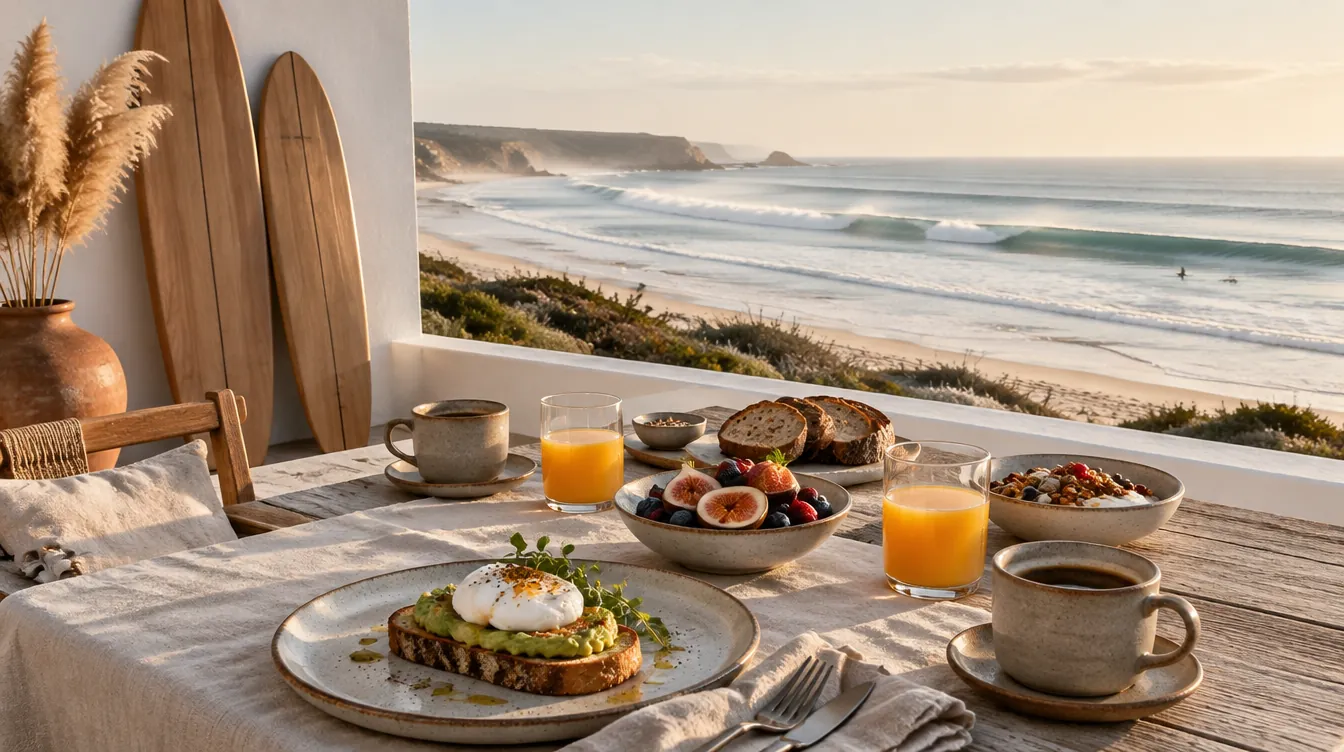
- 9:30 am, breakfast: eggs, sourdough bread, yoghurt, homemade granola and seasonal fruit. The real morning meal, eaten after the effort.
- 1 pm, lunch: the most substantial meal of the day. Fish or poultry, whole grains or pulses, vegetables from the market.
- 4 pm, afternoon snack: light, an hour and a half before the evening class. Fruit, homemade buckwheat cake, nuts and dried fruit.
- 8 pm, dinner: lighter, with plenty of vegetables, a protein and a fruit dessert, for a good night's sleep.
If your programme shifts during the stay, I shift with it. A class that runs over, a boat trip added at the last minute: I adapt. On the Essential or Prestige packages, I take care of one or two of these meals, usually dinner, or lunch and dinner. Between meals, water, herbal teas and fruit are available all day.

Diets, allergies and preferences: everyone gets the right plate
In a group of ten or twelve people, it is rare for everyone to eat the same thing. Vegetarian, vegan, gluten-free, dairy-free, nut or shellfish allergies: I ask for a precise list before I arrive and build the menus from there.
My rule is to avoid the plate that sits apart and makes someone feel different. Whenever possible, I design the dish so it works for everyone: a dairy-free sauce, a gluten-free side. When that is not possible, the guest gets an adapted version of the same dish, prepared with the same care.
For serious allergies, I cook separately and check every ingredient I buy.
Local produce, wherever the retreat takes place
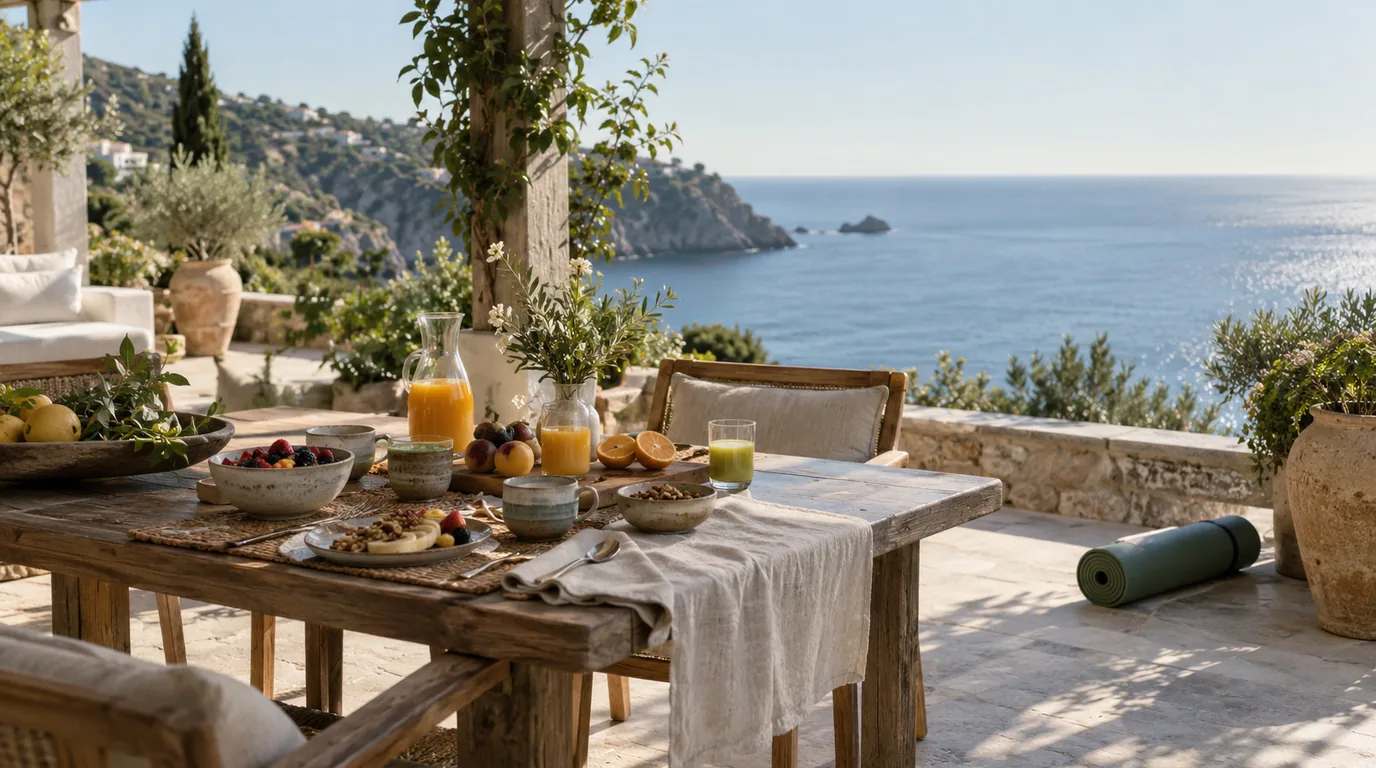
I do the shopping myself, at the market and from local producers, and build the menus around what I find. It is the best way to cook fresh and to give your guests a taste of the place they are staying in.
In the Algarve, that means fish from the local auction, citrus, almonds and sweet potatoes. In Mallorca, island olive oil, market vegetables and seasonal fruit. In Greece, on Mykonos or elsewhere, yoghurt, feta, herbs and grilled fish. For a retreat in a chalet in the Alps, root vegetables, trout, a little mountain cheese and warming evening soups.
Over a stay of four to seven days, I also keep things varied: no dish twice, different colours and textures from one meal to the next, and a slightly more festive dinner on the last night to close the retreat.
Groceries are paid at cost, on receipts, on top of my fee. You know exactly what was bought.
How we work together
It all starts with a conversation, by video or WhatsApp call, a few weeks before the retreat. We talk about the venue, the number of guests, the class schedule, dietary needs and how the kitchen is equipped. I then send you a menu proposal, and we fine-tune it together.
I arrive no later than the day before the first meal, to do the shopping and settle into the kitchen. During the stay, I cook, plate and serve at the agreed times, then leave the kitchen clean and tidy.
I stay discreet: your retreat keeps its calm, and your guests mostly see me when I bring the dishes out. You have one single contact for everything to do with food. Above fifteen guests, I recommend adding a waiter so service stays smooth.
What it changes for you and your guests
For you, it is one less thing to think about. No shopping list between two classes, no improvised meals, no kitchen to clean up at night. You can give your full attention to teaching and to your group, which is what your guests came for.
For them, meals become moments to look forward to: they arrive at class feeling light, gather around the table to talk about the day, and discover the local food without leaving the villa.
Planning a Pilates retreat by the Mediterranean or in the mountains? Write to me or send me a message on WhatsApp with your dates and programme. You can also have a look at my other wellness retreats.